Potential Energy and Conservative Forces
Branch role: This page develops potential energy as a system/configuration quantity, derives near-Earth GPE, relates elastic energy to graph area, and explains .
Overview
This branch note explains potential energy as system energy associated with position or configuration, with emphasis on gravitational, elastic and electric examples used in H2 Physics.
Core Ideas
- Potential energy belongs to an interacting system and requires a chosen reference level.
- Conservative-force work can be represented by changes in potential energy.
- In one-dimensional uniform-field cases, the force is related to the negative gradient of potential energy.
Exam Relevance
Use this note when deciding a reference level, deriving or applying , finding elastic energy from area, or interpreting .
What potential energy belongs to
Potential energy is associated with the configuration of interacting bodies, not with one completely isolated object. Examples include:
- object–Earth configuration: gravitational potential energy;
- charge configuration in an electric field: electric potential energy;
- deformed spring or elastic material: elastic potential energy.
The zero of potential energy is arbitrary. A change
is independent of adding the same constant to every value of .
Conservative forces
A force is conservative if its work between two positions is independent of path. Equivalently, its total work around a closed path is zero.
For a conservative interaction,
Positive work by the conservative force corresponds to decreasing potential energy. Negative work corresponds to increasing potential energy.
Gravity, electrostatic force and an ideal spring force are conservative. Friction and drag are non-conservative because their work generally depends on the path and transfers mechanical energy into internal energy.
Near-Earth gravitational potential energy
Consider lifting a body of mass slowly from height to . Slow lifting means negligible acceleration and negligible change in kinetic energy, so the applied upward force has magnitude .
The work done by the applied force is
This becomes the increase in gravitational potential energy of the object–Earth system:
If is chosen at ,
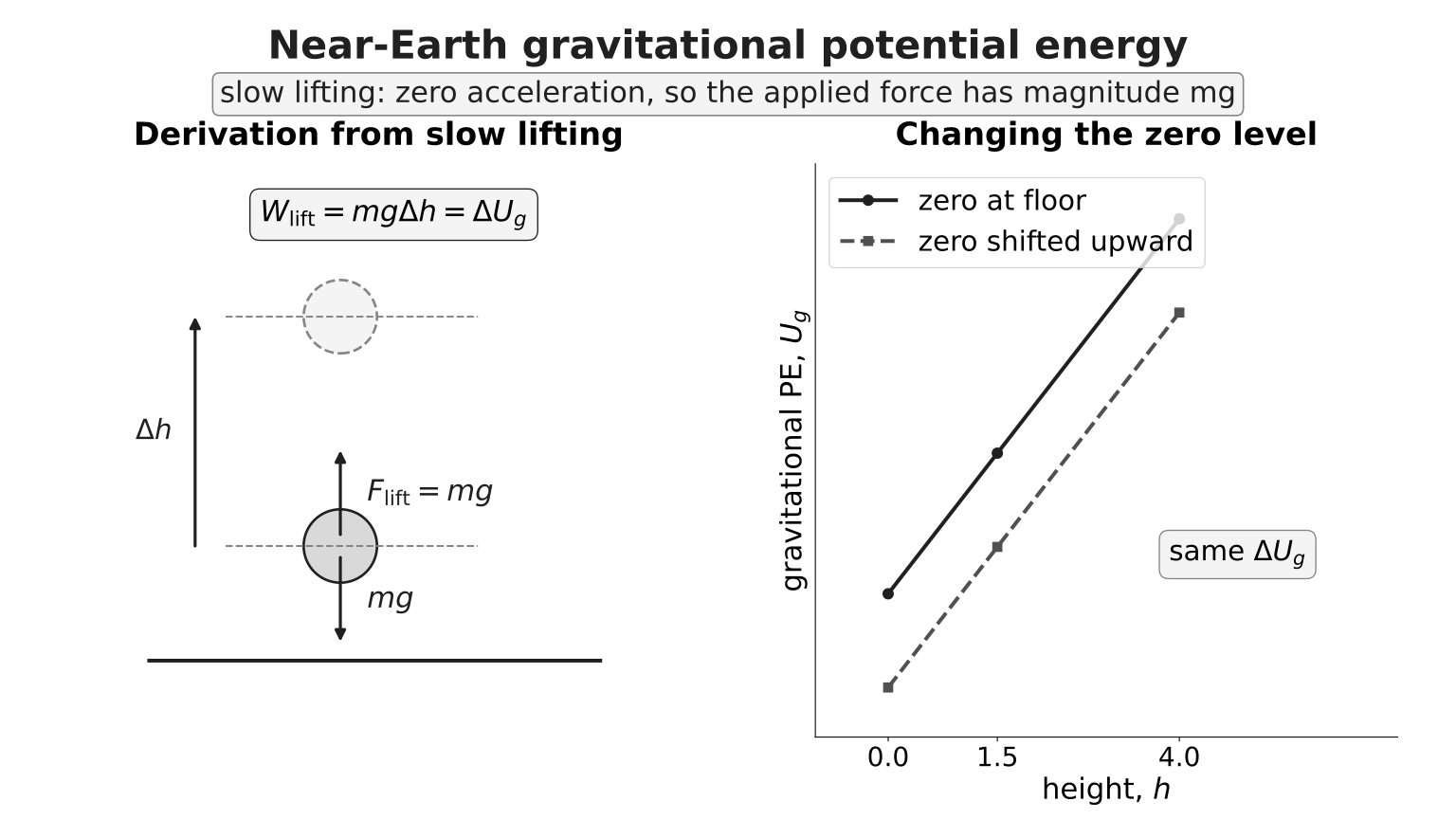
Figure: The equality follows from zero acceleration during slow lifting; it is not true for every upward motion. The vertical change determines , regardless of whether the body follows a vertical path or a ramp, provided is uniform and dissipative effects are handled separately.
The formula is valid near Earth’s surface over distances for which is approximately constant. The more general gravitational-potential treatment belongs in Gravitational Fields.
Worked example: arbitrary zero
A mass moves from to above a floor:
Choosing the tabletop rather than the floor as changes the individual and values but not .
Elastic potential energy
The elastic potential-energy increase equals the work done in slowly deforming the material, provided dissipative losses are negligible:
For a Hooke-law spring, , so from natural length to extension :
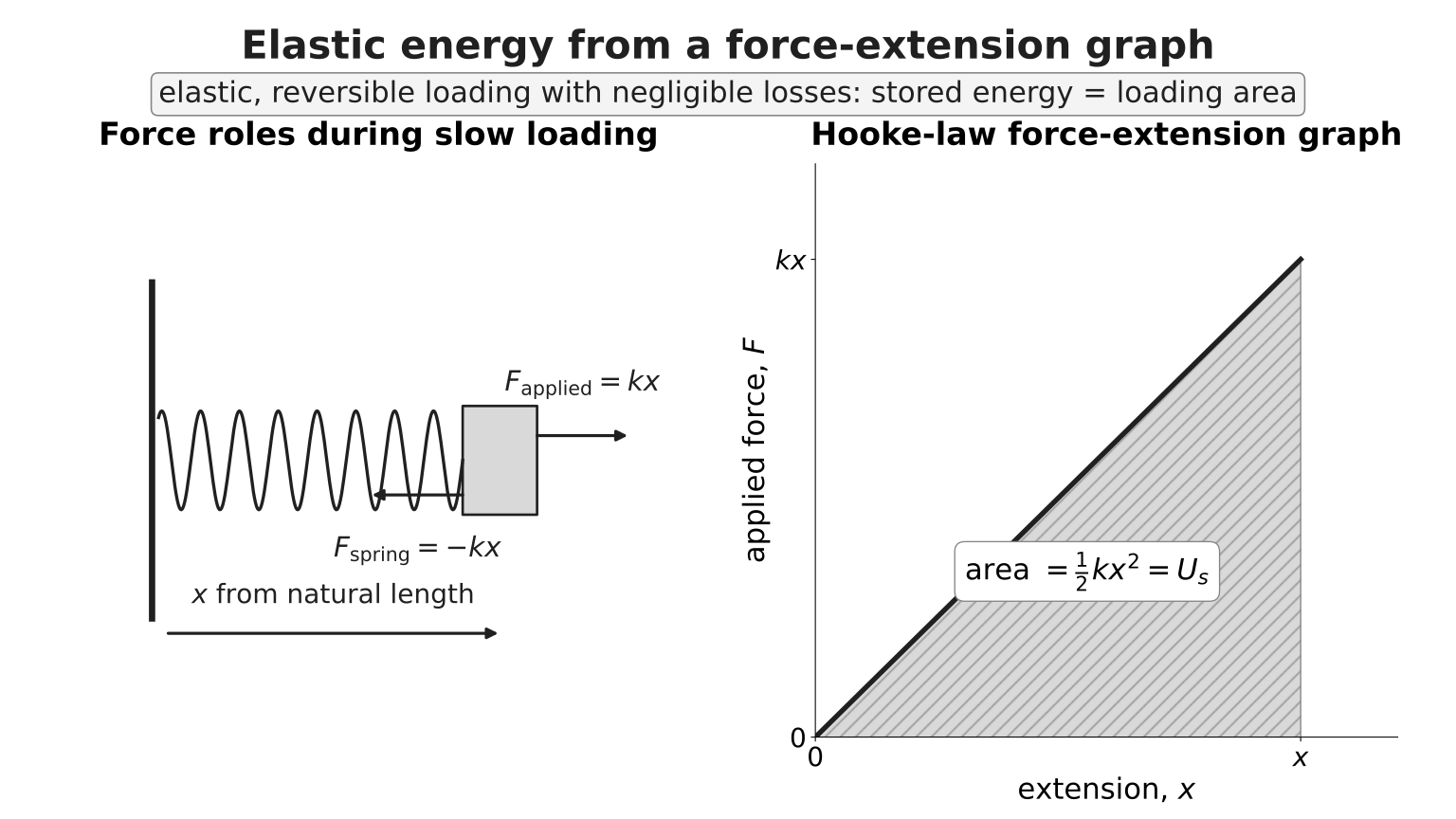
Figure: The area rule is the general syllabus idea; the triangle is the special linear case. Extension is measured from natural length. The restoring force on an attached mass is , directed toward the undeformed position.
Work by the spring
If extension changes from to ,
When a stretched spring moves toward natural length, decreases and the spring does positive work.
Electric potential energy: the required distinction
Electric potential energy is associated with the configuration of charges in an electric interaction. Like gravitational potential energy, it is defined through work by a conservative field and only differences are physically significant:
Detailed formulas involving electric potential are developed in Electric Fields. Here, the required distinction is conceptual:
- gravitational PE concerns masses and gravitational interaction;
- electric PE concerns charges and electric interaction;
- elastic PE concerns deformation of matter.
Force from a potential-energy graph
For a one-dimensional conservative interaction,
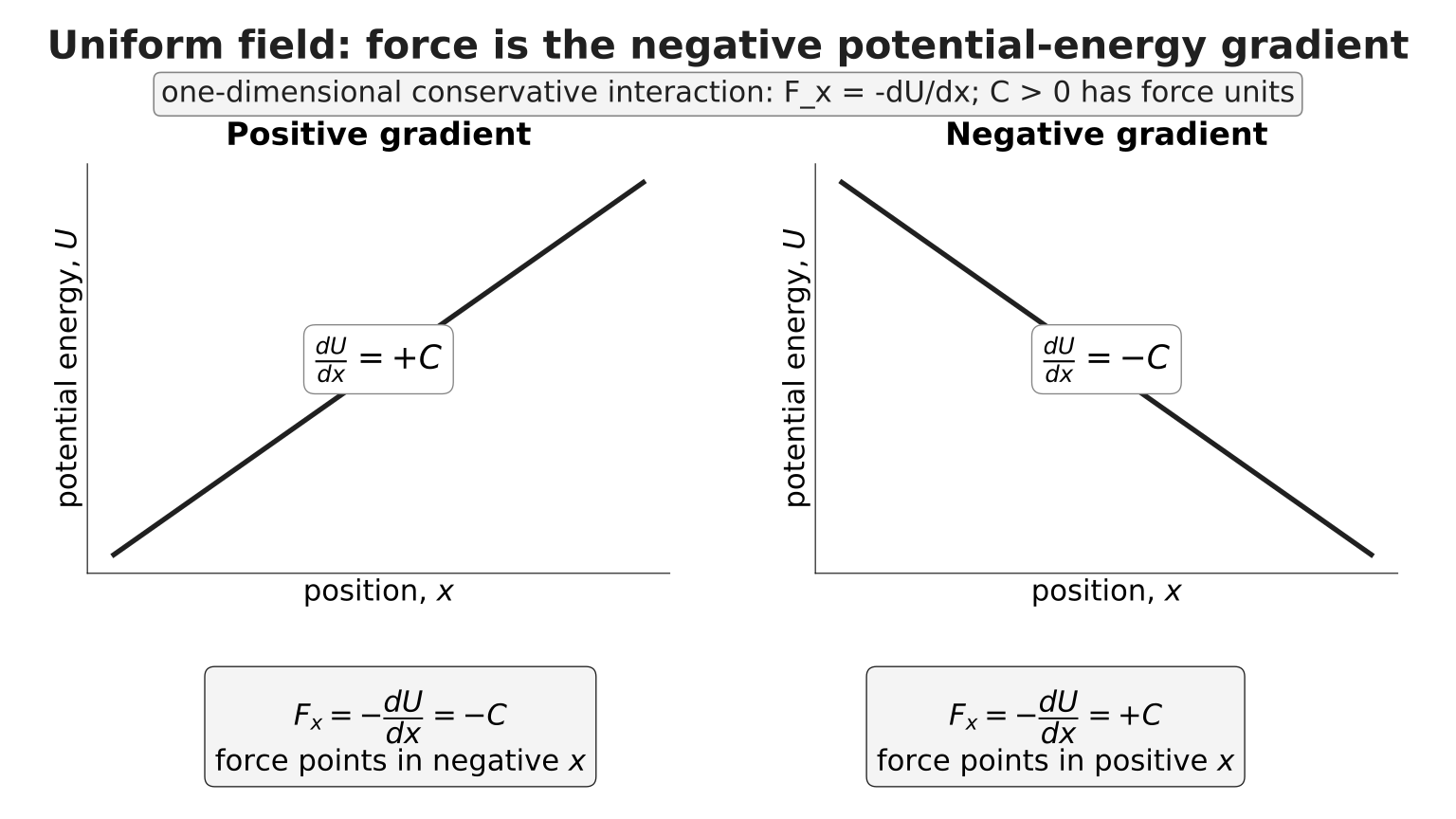
Figure: The force is the negative gradient of the potential-energy graph; here is a constant with force units. A straight line represents a uniform field because its gradient, and therefore the force, is constant. A steeper graph means a larger force magnitude; a stationary point has .
Reading the sign
- If rises as increases, and .
- If falls as increases, and .
- The force points toward decreasing .
Uniform gravitational example
Choose upward . Near Earth,
so
The negative sign correctly gives a downward gravitational force.
Hooke-law example
For
Mechanical energy
When conservative interactions are represented through potential energy and no net non-conservative transfer changes the system’s mechanical energy,
If friction or an external drive matters, include its transfer explicitly rather than applying this equation blindly. See Energy Forms and Conservation.
Common errors
- Saying a body “contains GPE” without identifying the gravitational interaction/system.
- Treating as an absolute value independent of reference level.
- Using path length instead of vertical height difference in .
- Assuming when the body accelerates.
- Starting with before checking the force–extension relation is linear.
- Omitting the negative sign in .
- Calling the force equal to the graph gradient rather than its negative.
Summary
| Interaction | Potential-energy relation | Force/work link |
|---|---|---|
| near-Earth gravity | ||
| Hooke-law spring | ||
| any 1D conservative interaction |