Work, Energy, and Power
Topic hub: Begin here, then use the linked branch notes for focused graph methods, derivations, potential-energy details, energy accounting, power and efficiency.
Overview
Work, Energy, and Power is the main Topic 06 hub. It organises work as an energy transfer, then connects force-displacement graph area, kinetic energy, potential energy, conservation, power and efficiency.
Core Ideas
- Work is a scalar energy transfer caused by a force component along a displacement.
- Net work changes kinetic energy; work by individual forces accounts for particular energy transfers.
- Potential energy requires a system and reference choice, while mechanical-energy conservation requires suitable force conditions.
- Power measures rate of energy transfer, and efficiency compares useful output with total input for the same process.
Exam Relevance
For H2 questions, expect to choose between force equations and energy equations, calculate signed work, use force-displacement areas, apply , use and under their conditions, and interpret power or efficiency data carefully.
The organising idea: track energy transfers
Dynamics links a resultant force to acceleration. This topic asks a complementary question:
How much energy is transferred, stored or dissipated as a system changes, and how quickly does that transfer occur?
Three quantities organise the answer:
- work measures an energy transfer caused by a force acting through a displacement;
- energy is a conserved scalar quantity used to account for the state of a system;
- power measures the rate of doing work or transferring energy.
Before writing an equation, identify:
- the system being studied;
- the initial and final states;
- transfers across the system boundary;
- energy stores included within the system.
The system choice determines whether gravity or a spring is represented as a force doing external work or through a potential-energy change. Both descriptions can be correct, but they must not be mixed in one equation.
Work done by a force
For a constant force and displacement , the work done by that force on the chosen object is
where is the angle between the force and displacement. Work is a scalar, although it is calculated from two vectors. Its SI unit is the joule:
Always name the agent and receiver: “work done by friction on the block” is clearer than “work done”.
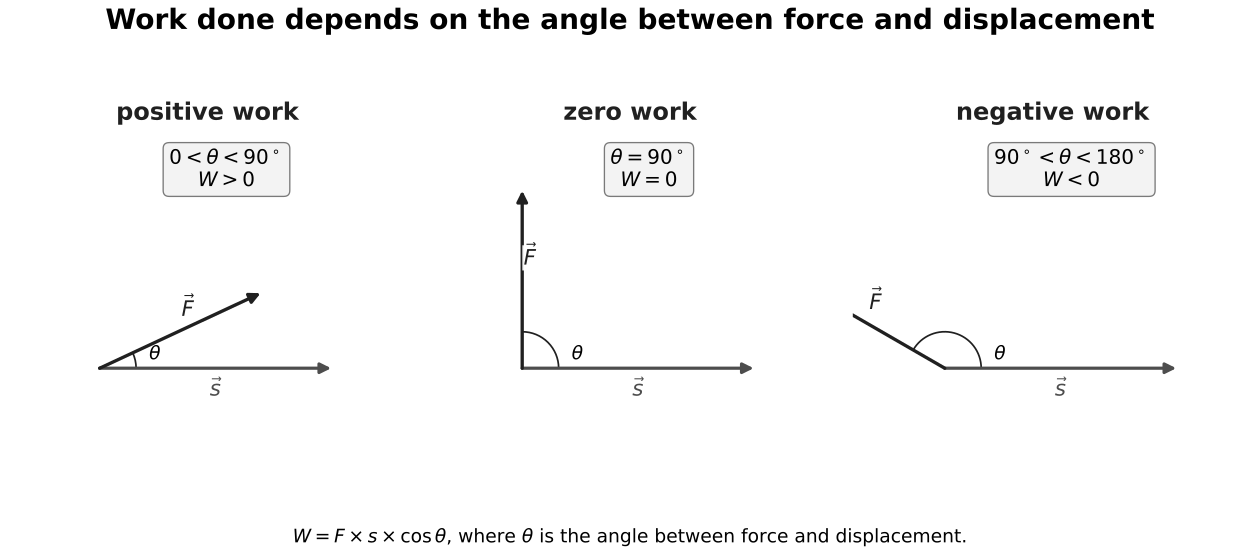
Figure: Only the component parallel to the displacement contributes to work. A component along the displacement gives positive work on the object, a perpendicular force gives zero work, and an opposing component gives negative work on the object. The sign describes whether that force transfers energy to or from the chosen object/system; it is not a spatial direction attached to the scalar quantity .
2.1 Work by one force versus net work
If several forces act, calculate the work by each force separately and add algebraically:
This equals the work done by the resultant force when the same displacement is used. A force can do positive work while the net work is zero because another force does equal negative work.
2.2 Variable force and graph area
For motion along , the work done by a variable force component is the signed area under the force–displacement graph:
At H2 level, areas are often rectangles, triangles or trapezia. Area below the -axis is negative.
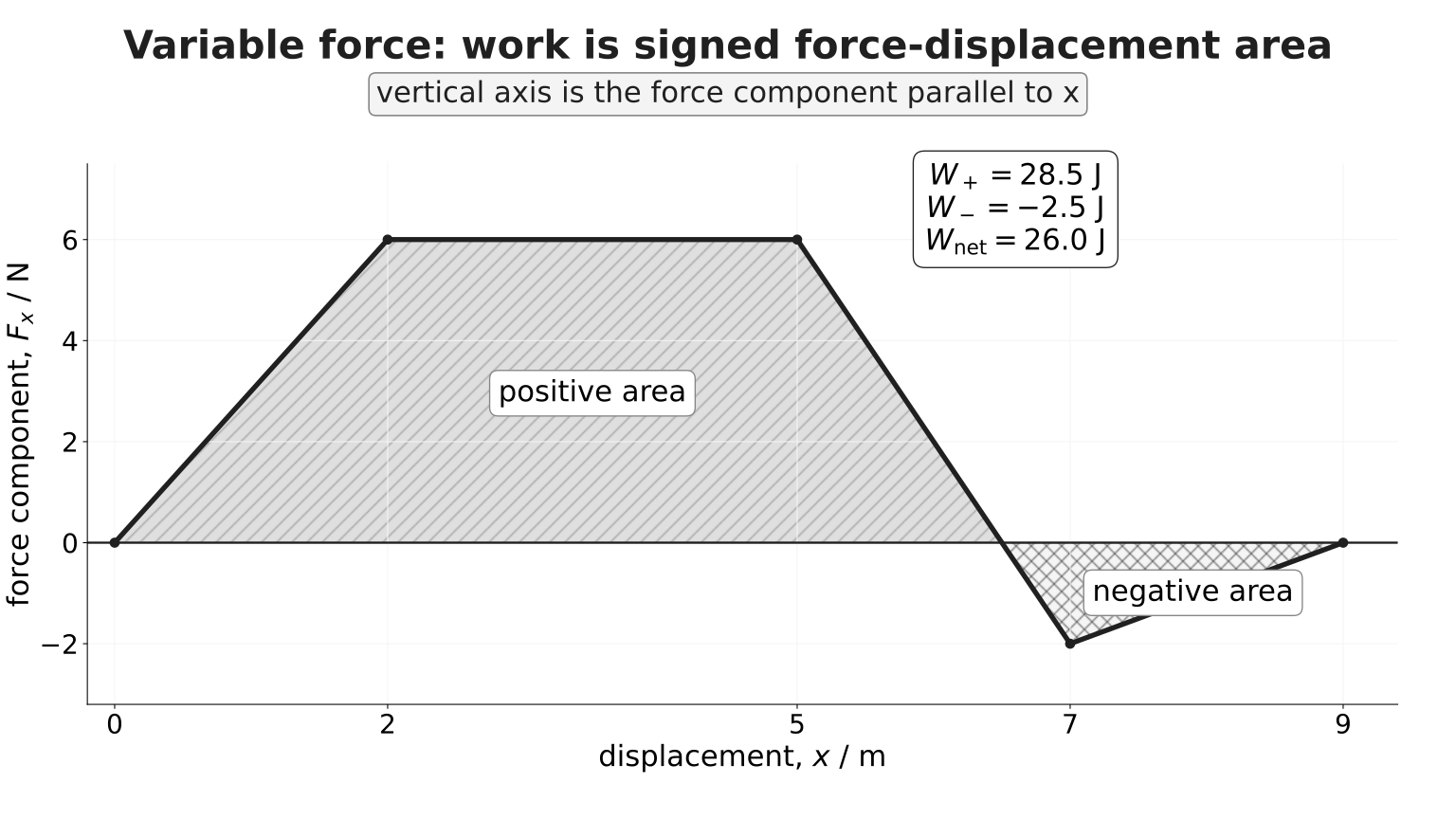
Figure: The positive shaded region contributes positive work and the below-axis region contributes negative work. Net work is the algebraic sum of the signed areas, not the total geometric area. The vertical axis must be the force component parallel to the displacement.
Two important work calculations
3.1 Stretching an elastic material
The work done by the applied force in slowly deforming a material equals the area under its force–extension graph. This result is general; it does not require a straight line.
For a spring obeying Hooke’s law, , from zero extension to :
This work is stored as elastic potential energy when losses are negligible.
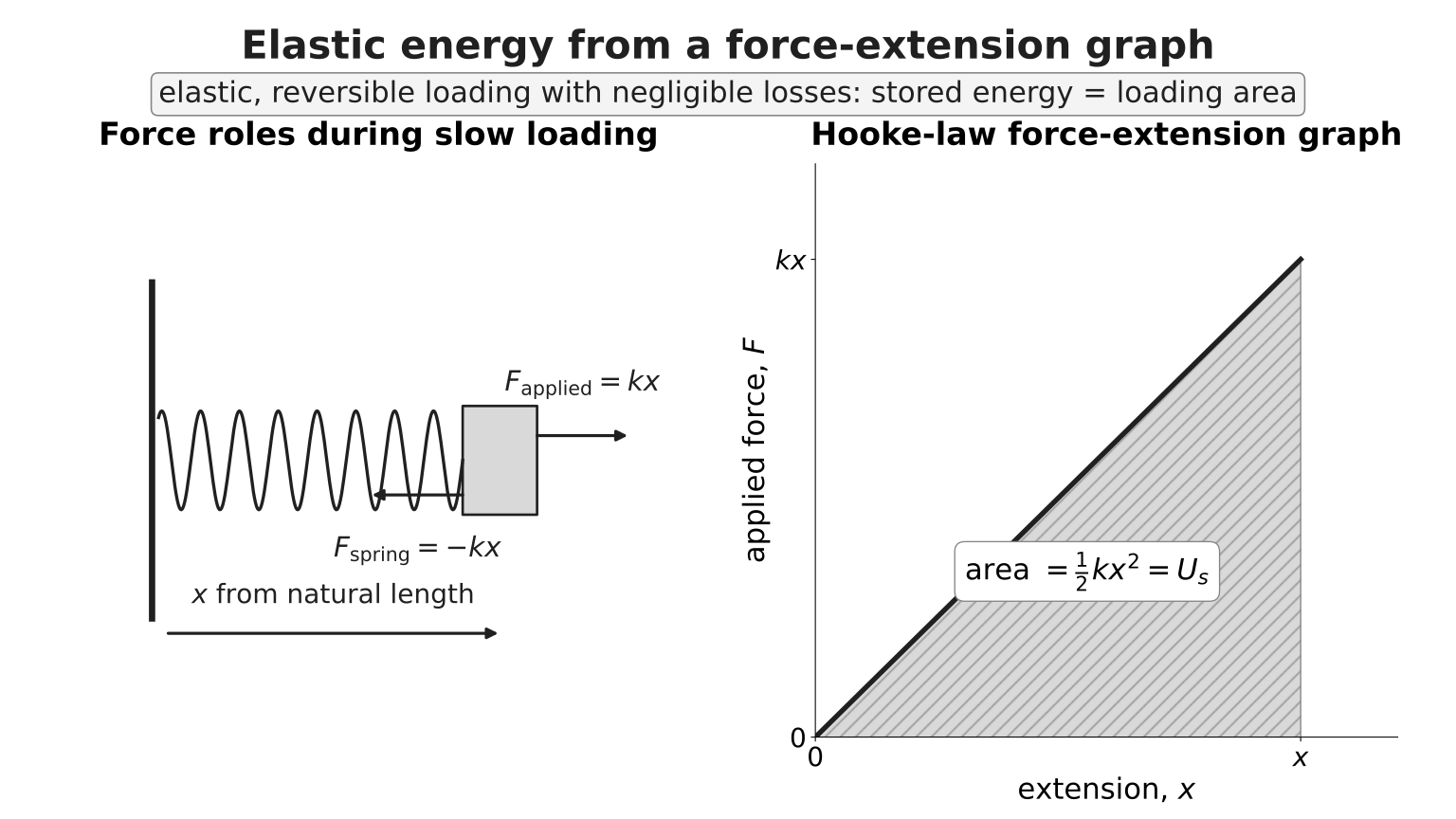
Figure: The loading force rises linearly with extension only within the Hooke-law region. The triangular area under is . The spring’s restoring force points opposite to the extension, so it is written in a signed one-dimensional model.
3.2 Gas expanding against constant external pressure
For a piston of area moving outward by against constant external pressure :
Hence the work done by the gas on the surroundings is
With this convention, expansion has and positive work by the gas; compression has negative work by the gas.
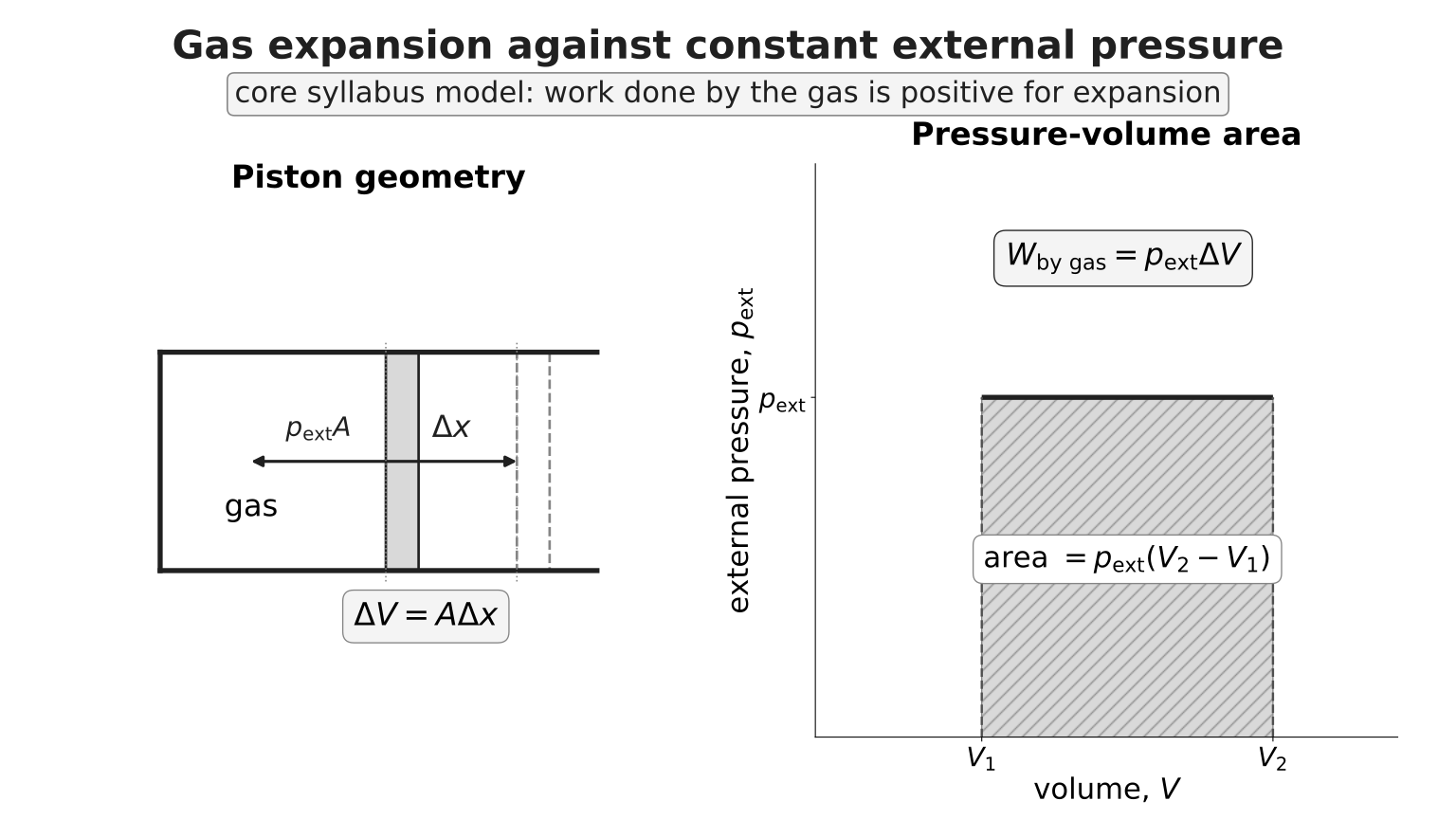
Figure: The piston derivation and the rectangular area under the constant- pressure–volume graph express the same work, . The pressure is the external pressure resisted by the gas; the core syllabus result assumes it is constant.
Enrichment — variable pressure. For a quasi-static expansion against varying opposing external pressure , the work by the gas is . In quasi-static mechanical equilibrium, at the moving boundary. This integral form is useful context, but the explicit 9749 requirement is expansion against constant external pressure.
Kinetic energy and the work–kinetic-energy theorem
The kinetic energy of a body of mass and speed is
It is scalar and non-negative; reversing the velocity does not make kinetic energy negative.
For a constant resultant force parallel to a straight-line displacement,
Therefore,
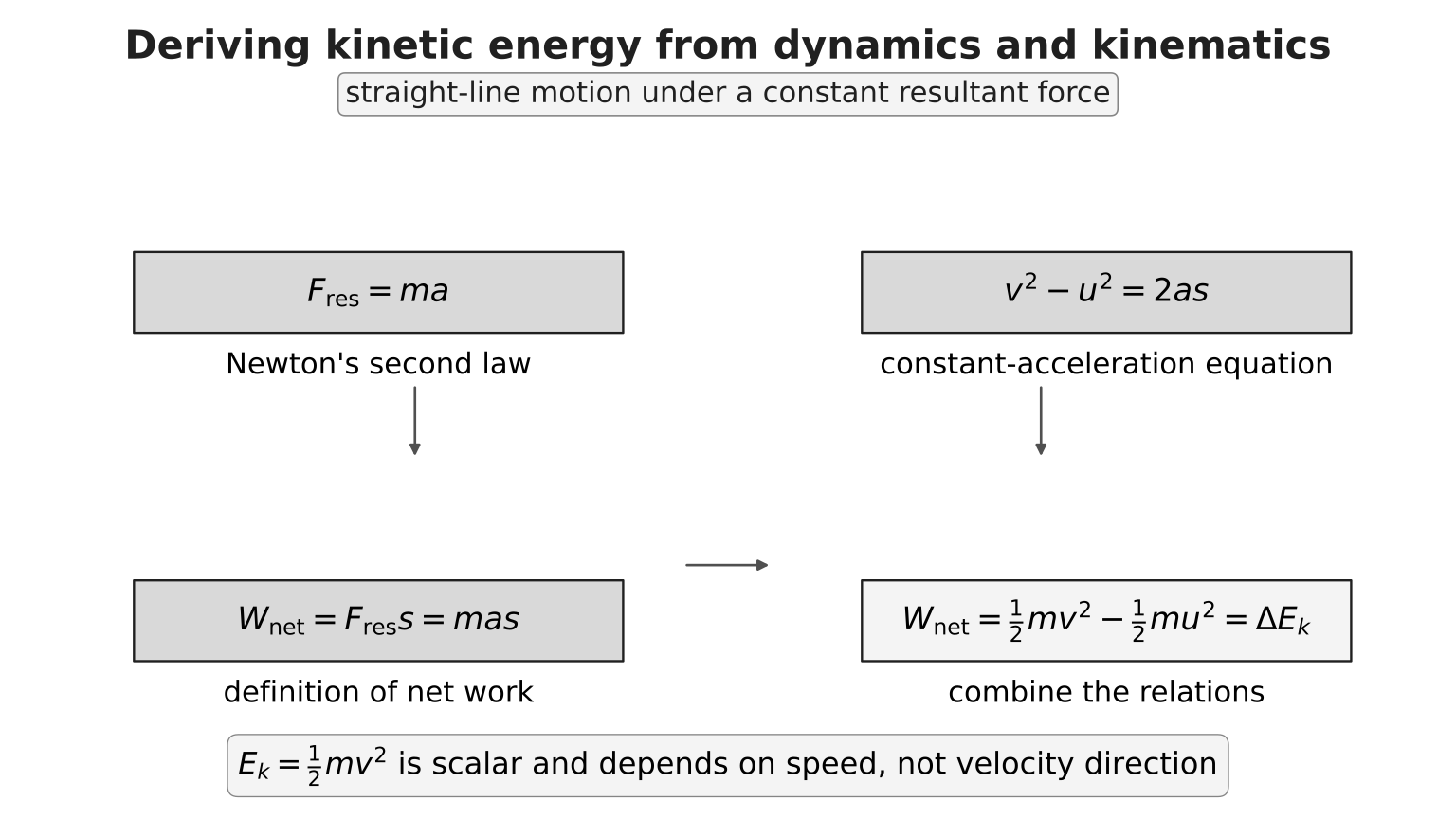
Figure: The constant-force derivation combines Newton’s second law with a constant-acceleration equation. The resulting theorem is more general: the net work done by all forces on a particle equals its change in kinetic energy, including when the individual forces vary.
The theorem is
Positive net work increases kinetic energy; negative net work decreases it. Zero net work means constant speed, not necessarily zero velocity or zero individual work.
Potential energy
Potential energy belongs to a system and depends on its position or configuration. Three syllabus categories are:
- gravitational potential energy: associated with the configuration of masses in a gravitational interaction;
- electric potential energy: associated with the configuration of charges in an electric interaction;
- elastic potential energy: associated with deformation of an elastic system.
Only changes in potential energy affect the energy accounting; the zero reference is chosen for convenience.
5.1 Near-Earth gravitational potential energy
Raise a body slowly through vertical height so that its acceleration and kinetic-energy change are zero. The applied upward force then has magnitude , so
Thus, near Earth’s surface where is approximately uniform,
Writing assumes a chosen level where .
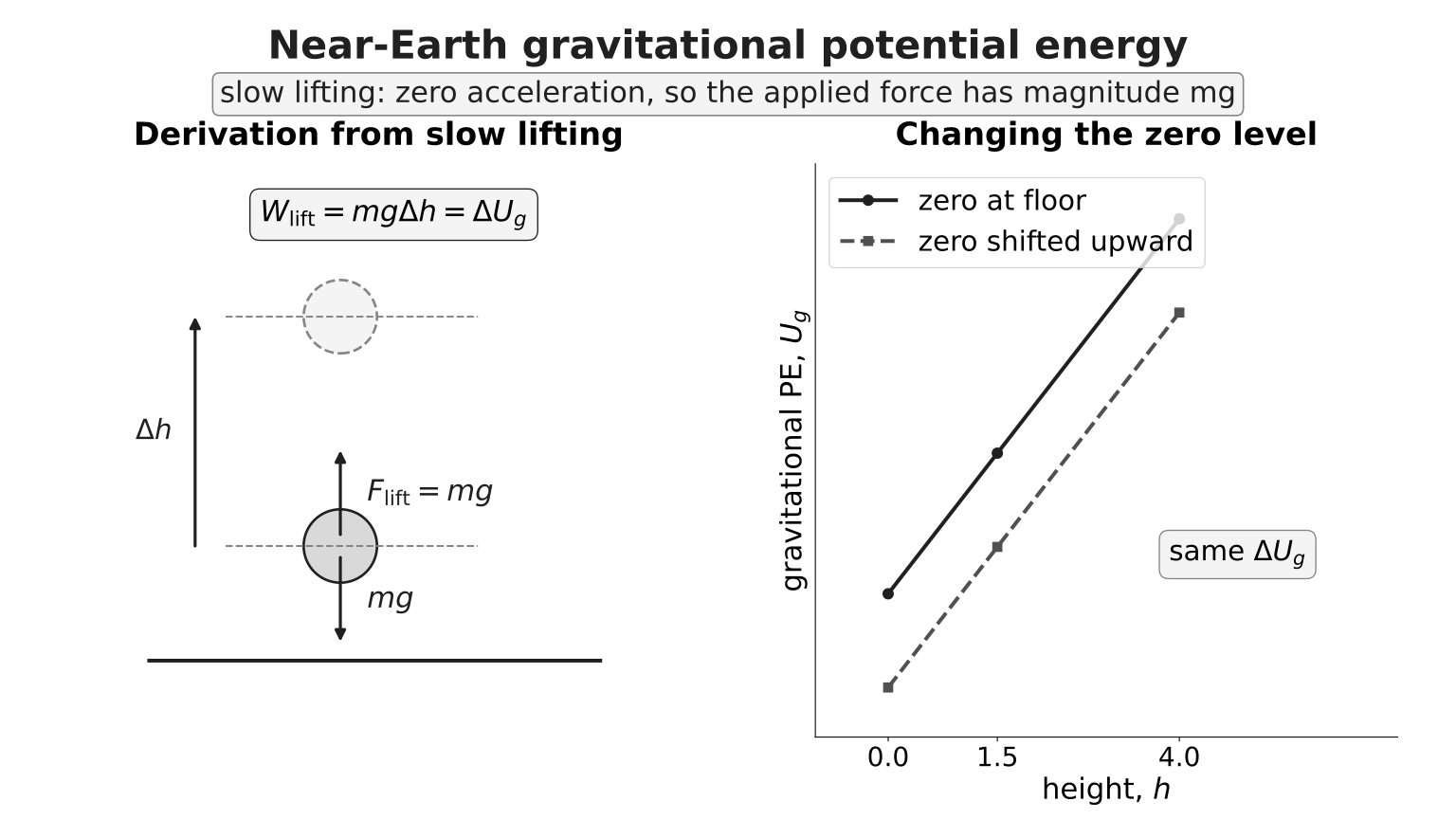
Figure: Slow lifting makes the applied force equal in magnitude to weight and prevents a kinetic-energy change. The gain depends only on the vertical height difference. Changing the zero level changes both labelled values of by the same constant but leaves unchanged.
5.2 Conservative force and potential-energy gradient
A conservative force does path-independent work. Its work between two positions is
In one dimension,
The negative sign means the force points toward decreasing potential energy. In a uniform field, force is constant, so the potential-energy graph is a straight line with constant gradient.
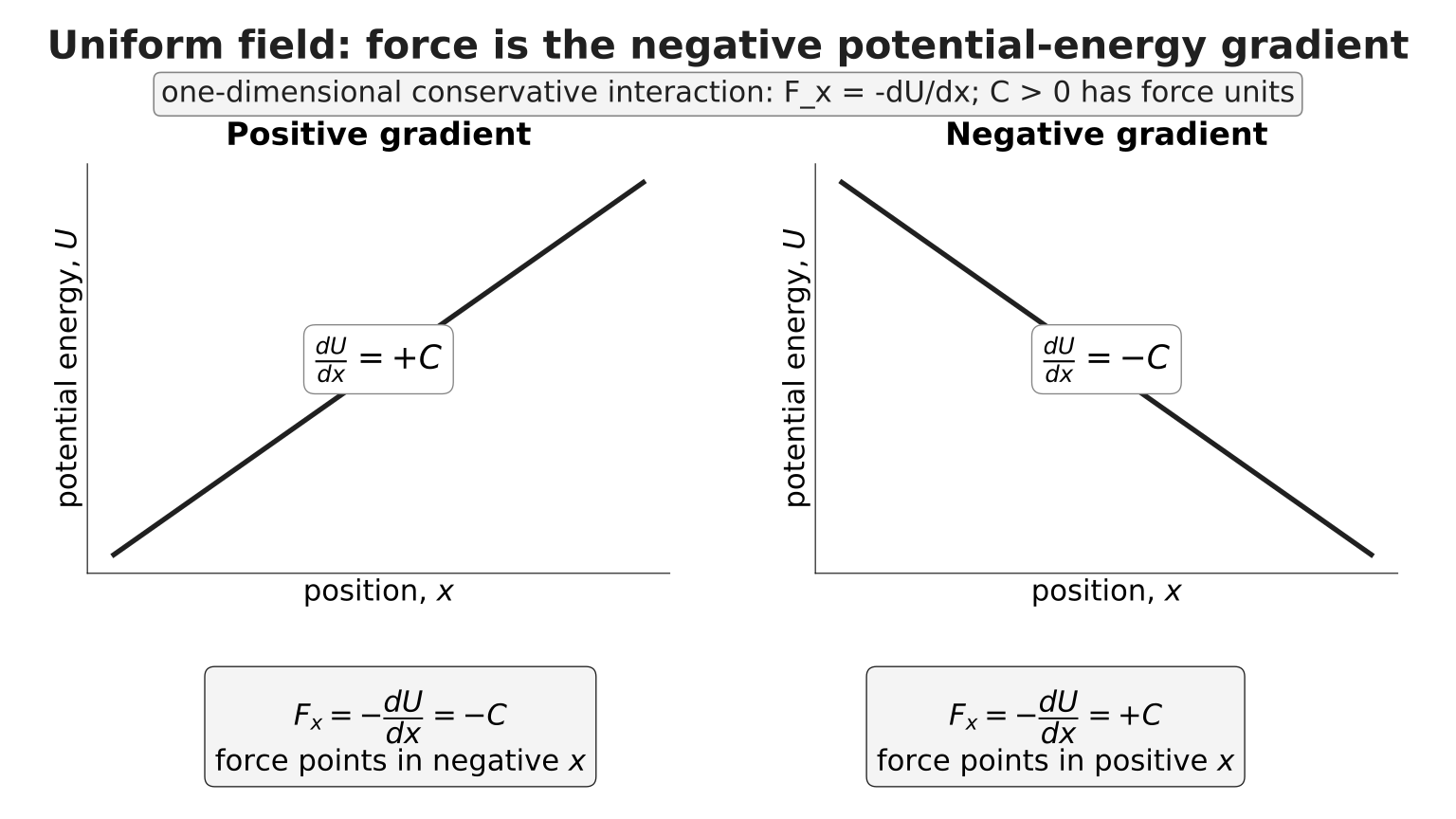
Figure: The slope of a – graph is , so the force equals the negative slope. In the diagram, is a constant with force units. A positive slope gives a force in the negative direction; a horizontal graph gives zero force. This force–potential-energy relationship is core syllabus content, not merely a graphical enrichment.
Conservation and energy accounting
The principle of conservation of energy states that energy cannot be created or destroyed; it can be transferred or transformed. For an isolated system,
Mechanical energy is
Mechanical energy is conserved only when no net transfer changes the system’s mechanical energy, for example when only conservative interactions are relevant:
If friction, drag or an external drive transfers energy, use an explicit accounting equation. One useful form for a system whose potential energies are included is
where is work across the boundary by external forces not already represented through . For a wider isolated system, a decrease in mechanical energy appears as increased internal energy, sound or deformation; total energy is still conserved.
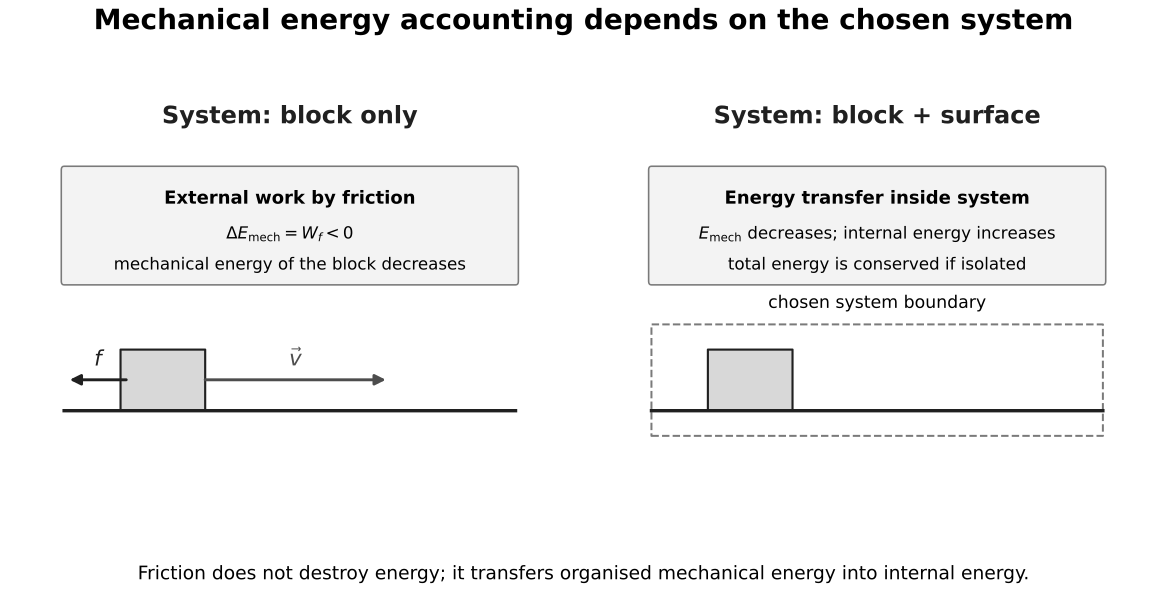
Figure: For the horizontally sliding block alone, friction does negative external work and reduces . For the wider isolated block–surface system, the corresponding amount appears as increased internal energy. “Mechanical energy lost” therefore means transferred out of mechanical stores, not destroyed.
Power and efficiency
Average power is work done or energy transferred per time interval:
Instantaneous mechanical power delivered by a force is
The relevant force is the force whose power is requested, not automatically the resultant force. At constant speed, an engine may deliver non-zero power while resistive forces remove energy at the same rate.
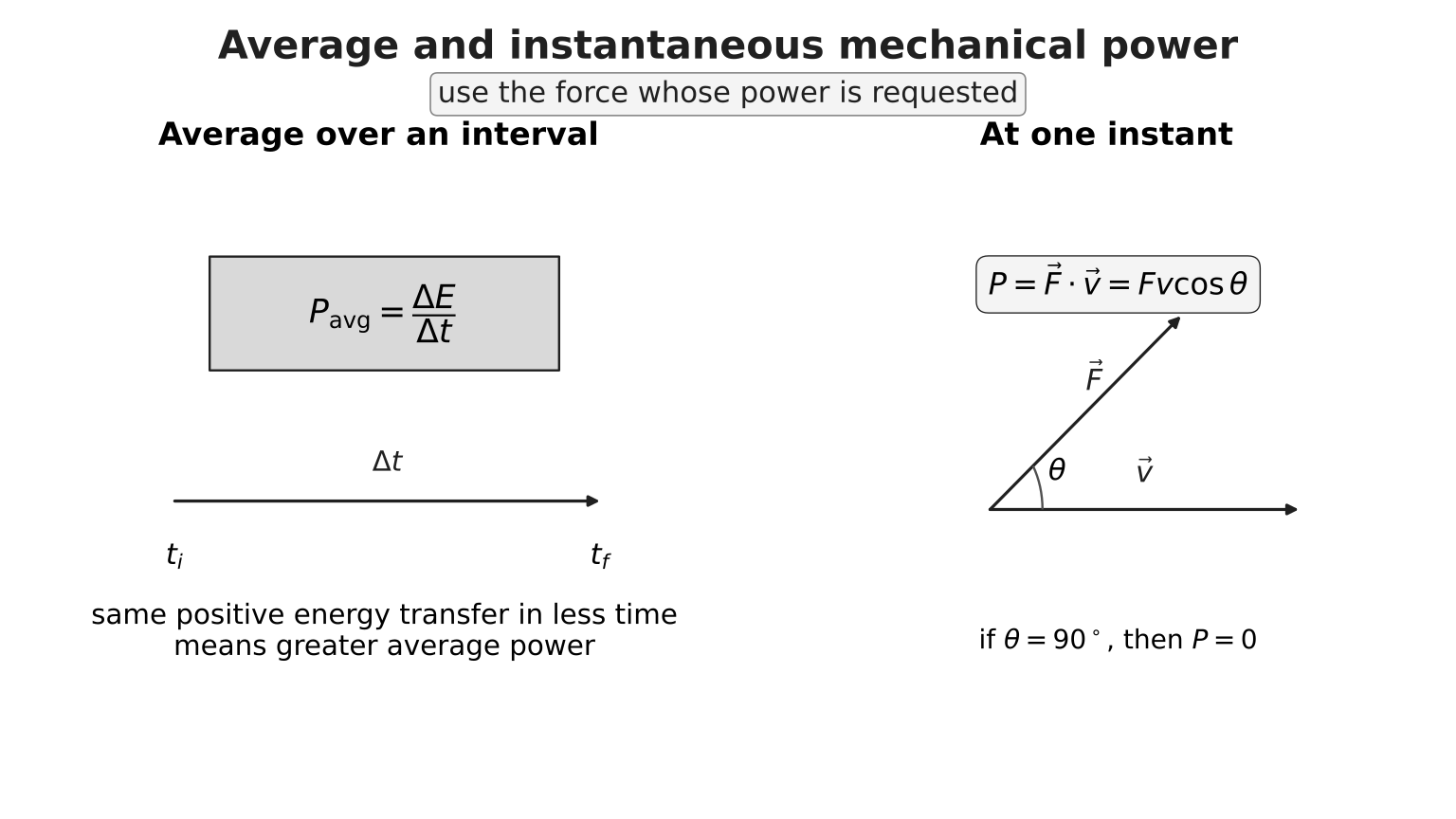
Figure: Average power compares a finite energy transfer with a finite time interval. Instantaneous power uses the force component parallel to the current velocity. A perpendicular force can change the direction of motion while doing zero work and delivering zero instantaneous power.
Efficiency is the useful fraction of the total input:
provided the energy and power ratios refer to the same device and interval. Percentage efficiency is .
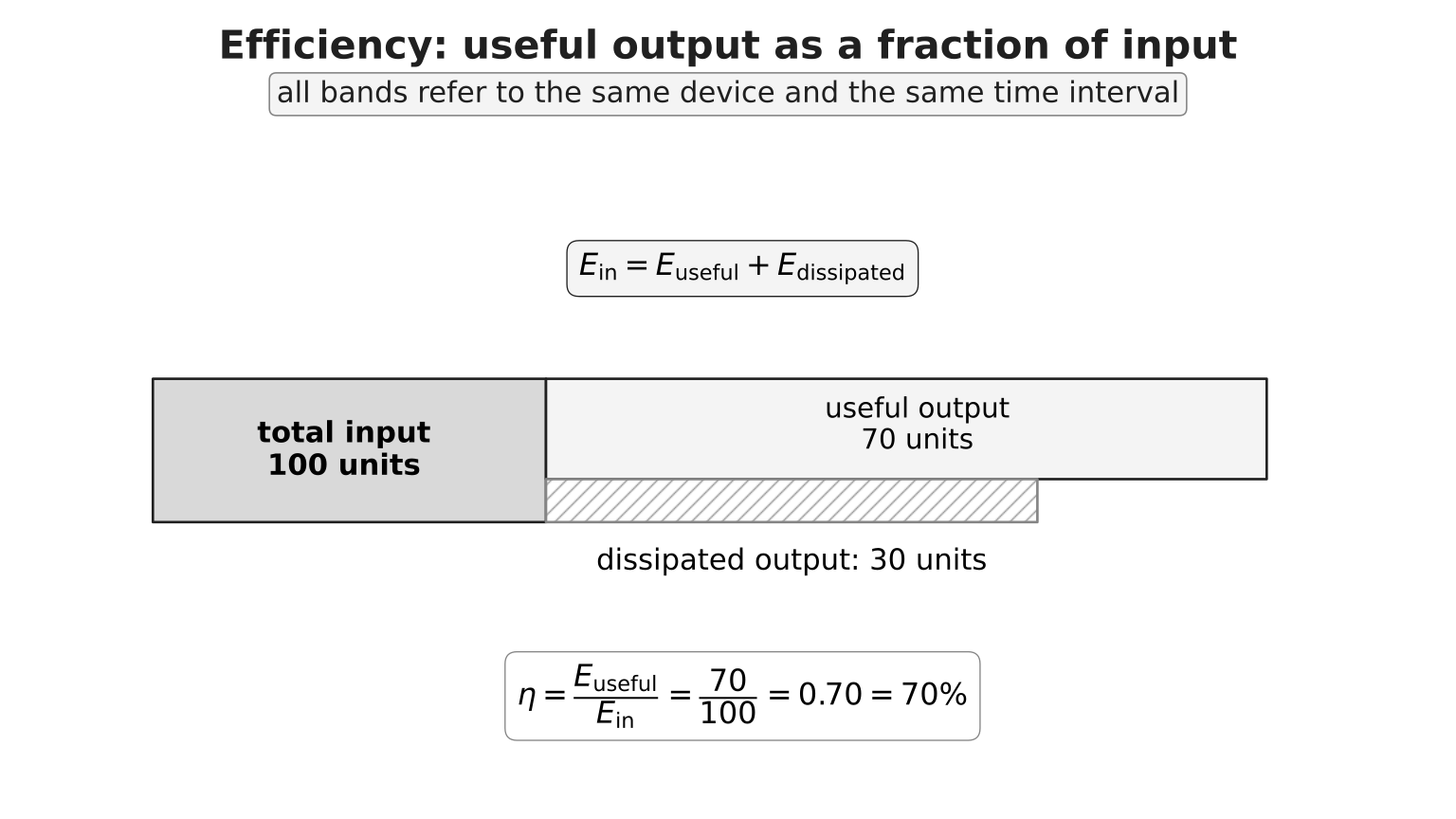
Figure: Total input divides into useful output and dissipated output. The band widths represent the energy amounts in one common interval, so the useful fraction is the efficiency. Dissipated energy is not destroyed; it is transferred into less useful stores, commonly internal energy and sound.
Worked examples
8.1 Braking distance
A car travels at . A constant braking force acts opposite to the motion on a level road. Neglect other work.
so
The negative work matches the negative change in kinetic energy.
8.2 Spring launcher
A trolley is released from rest by a spring of constant compressed by . Neglect losses.
giving
8.3 Motor power with resistance
A car moves uphill at constant speed . The total opposing force along the slope is . The engine force has the same magnitude because acceleration is zero:
If the engine is efficient, its input power is
Choosing a method
| Information given or quantity required | Direct starting point |
|---|---|
| One constant force and displacement | |
| Variable force–displacement graph | signed area under the graph |
| Speed change from work by all forces | |
| Height/spring change with negligible dissipation | mechanical-energy conservation |
| Dissipation or an external drive matters | explicit energy accounting with transfer term |
| Rate over a time interval | |
| Force and instantaneous velocity | |
| Useful output and input |
Common misconceptions
- “A force acts, so it must do work.” Work requires a displacement component along the force.
- “Negative work means negative energy exists.” It indicates energy transfer opposite to the positive-work direction for the chosen system.
- “Area under any force graph is work.” The horizontal axis must be displacement, and the plotted force component must be parallel to it.
- “The work by one force equals .” The theorem uses net work by all forces.
- “Potential energy belongs to one isolated object.” It belongs to an interacting system and depends on configuration.
- “ is absolute.” Its zero is arbitrary; is the physically relevant quantity.
- “Friction destroys energy.” It commonly transfers mechanical energy into internal energy of a wider system.
- “Constant speed means zero engine power.” It means zero resultant force; the engine can balance resistance while transferring energy continuously.
- “High power means more total energy.” Power describes rate; total energy also depends on duration.
- “Efficiency compares any output with any input.” Numerator and denominator must refer to the same device and interval.
Formula and condition summary
| Relationship | Meaning and condition |
|---|---|
| one constant force; between force and displacement | |
| signed work from a force–displacement relation | |
| constant external pressure | |
| kinetic energy of a body | |
| net work by all forces on a particle | |
| near Earth, approximately uniform | |
| Hooke-law spring measured from natural length | |
| one-dimensional conservative interaction | |
| no net non-conservative transfer changing mechanical energy | |
| average transfer rate | |
| instantaneous power delivered by that force | |
| matched system and interval; similarly for power |
Links
- Work and Force–Displacement Graphs
- Kinetic Energy and the Work–Energy Theorem
- Potential Energy and Conservative Forces
- Energy Forms and Conservation
- Power and Efficiency
- Dynamics
- Circular Motion
- Gravitational Fields
- Current Electricity Fundamentals
Provenance
- source anchor: WEP Lecture Anchor Notes Main
- active scope: H2 Physics 9749 syllabus for examination in 2026, Topic 5(a)–(l)
- revised draft prepared under
docs/physics_gpt_wiki_notes_regeneration_workflow.md