Power Transmission with Transformers — Enrichment
Enrichment — beyond the explicitly named H2 Physics 9749 transformer outcome. This branch develops a useful application from the teacher anchor. The core syllabus requirement remains the simple iron-core transformer and ideal ratio.
Main topic: Transformers
Overview
Transformers make it convenient to transmit a fixed electrical power at high voltage and low current, then reduce the voltage before consumer use. The smaller line current greatly reduces resistive cable heating.
Core Ideas
- A step-up transformer is placed before the long transmission line.
- For fixed useful power, increasing voltage decreases current.
- Cable heating depends on , so the loss falls with the square of the current reduction.
- A step-down transformer reduces voltage after transmission; neither transformer creates extra power.
1. Where the transformers are used
A simplified transmission chain is:
- an AC generator supplies electrical power;
- a step-up transformer raises the transmission voltage;
- cables carry power at high voltage and lower current;
- step-down transformers reduce the voltage before use by consumers.
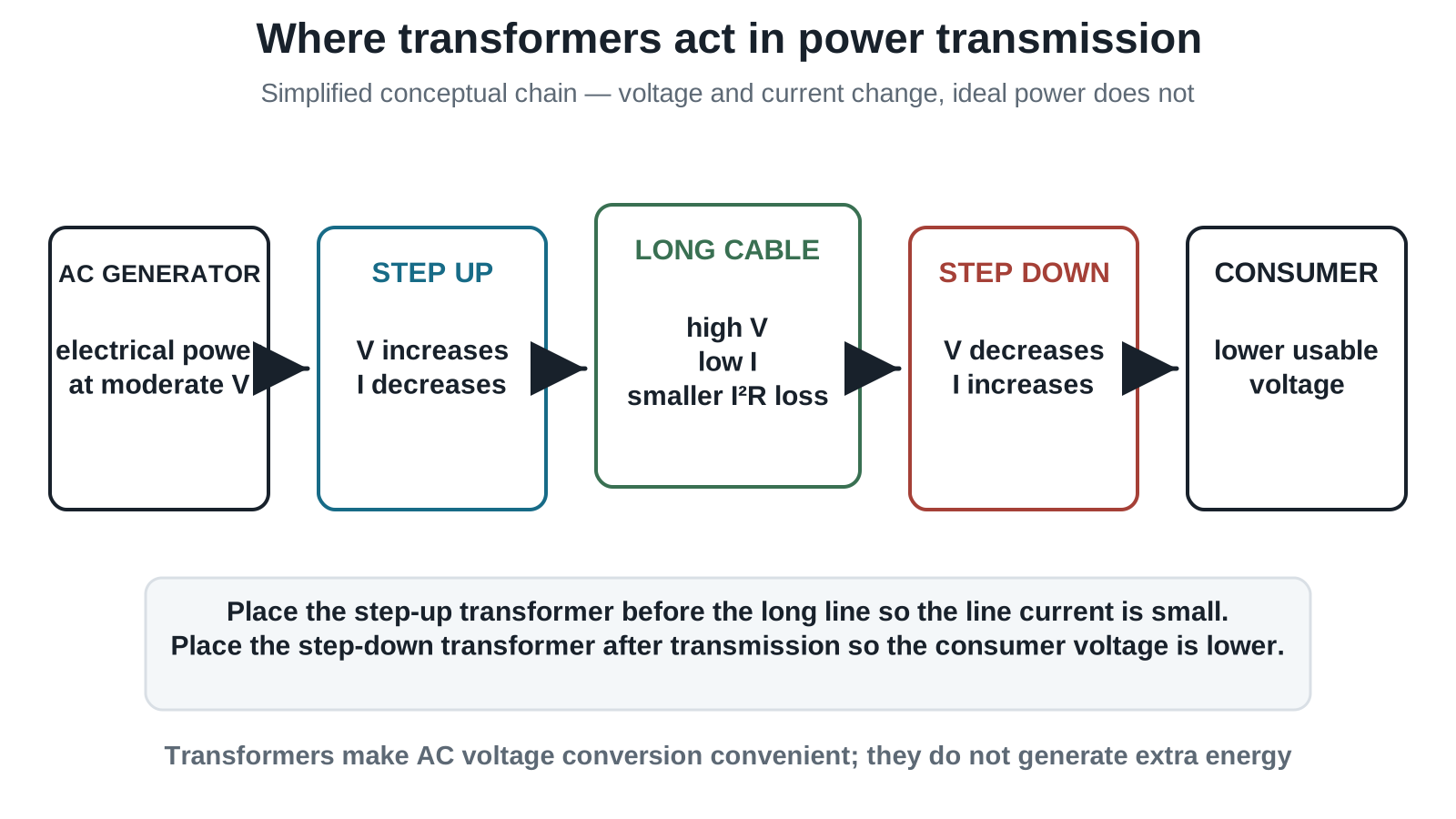
Figure: The step-up transformer is placed before the long transmission line, where reducing current matters most. A step-down transformer is placed after transmission so the consumer does not receive the very high line voltage. The transformers change voltage and current; they do not create the transmitted power.
2. Keep useful power and cable loss separate
In the simplified syllabus-style model, treat the useful transmitted power as fixed and use rms quantities:
This form assumes the model used in the question, such as a resistive or unity-power-factor load. Detailed AC power factor is beyond this branch.
For the resistive transmission cables,
These are different powers:
- is the intended rate of energy transfer along the system;
- is unwanted heating in the cable resistance.
3. Why raising voltage reduces loss
For fixed useful power,
If transmission voltage is multiplied by a factor , then current is divided by :
Therefore,
So multiplying the voltage by divides cable heating loss by , provided useful transmitted power and cable resistance are unchanged.
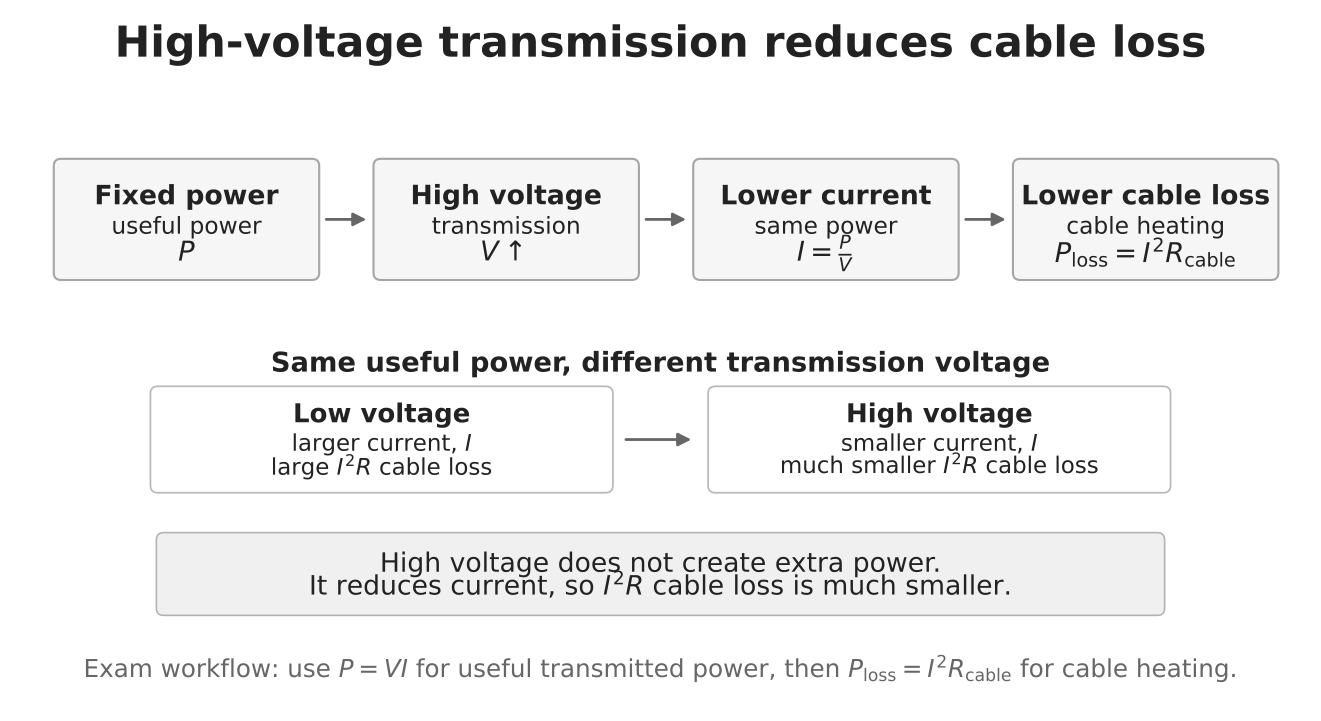
Figure: Follow the causal chain, not merely the slogan “high voltage is efficient”. The comparison holds for the same useful power and the same cable resistance: higher voltage gives lower current, and the square in makes the cable loss fall much more strongly.
4. Worked comparison
A system transmits through cables of total resistance . Compare transmission at and .
At
At
The voltage is ten times larger, the current is ten times smaller, and the cable loss is one hundred times smaller.
5. Common reasoning errors
- “Higher voltage reduces loss directly.” The causal link is: for fixed power, higher gives lower ; lower gives lower loss.
- “The step-up transformer adds power.” An ideal transformer conserves power. It trades higher voltage for lower current.
- “Use the consumer current in the transmission cable.” Use the current in the section of cable whose loss is being calculated.
- “The cable loss is .” describes the useful transmitted power in this simple model; cable heating is .
- “Voltage can be increased without limit.” Real systems face insulation, safety, clearance and equipment constraints; detailed engineering optimisation is beyond this branch.
Exam Relevance
This application is enrichment under the explicit 9749 transformer wording. If used in a school question or supplied context, keep useful transmitted power separate from cable loss and state the fixed-power assumption before using the and chain.
Exam-style reasoning template
- State that the useful transmitted power is fixed.
- Use to show that a higher transmission voltage gives a lower rms current.
- Use to show that lower current reduces cable heating.
- Conclude using the square dependence, not a vague statement about “less resistance”. The cable resistance has not been reduced in this comparison.