Internal Resistance
Branch note: This page deepens one part of Current Electricity Fundamentals.
Overview
This note deepens Current Electricity Fundamentals by isolating the behaviour of real sources.
The main idea is simple: when a source supplies current, not all the energy it supplies reaches the external circuit because some is dissipated inside the source.
Related topics:
Core Ideas
- A real source can be modelled as an ideal emf source in series with internal resistance.
- The terminal p.d. is the energy delivered per unit charge to the external circuit.
- The lost volts are the p.d. across the internal resistance.
- When a source supplies current, terminal p.d. decreases according to .
- Internal resistance changes both useful output power and source efficiency.
Exam Relevance
Internal-resistance questions often test whether students can distinguish emf, terminal p.d., and lost volts, and whether they can read and correctly from a -against- graph.
Definition
emf
The emf of a source is the energy supplied per unit charge by the source.
Unit:
Terminal Potential Difference
The terminal p.d. is the potential difference across the external terminals of the source.
It is the voltage available to the external circuit.
Internal Resistance
Internal resistance is the resistance inside the source itself.
Unit:
Why It Matters
Internal resistance explains:
- why terminal p.d. falls when current increases
- why batteries and power supplies heat up under load
- why short circuits are dangerous
- why an unused cell reads approximately its emf
- why source efficiency falls as more energy is lost inside the source
Key Representations
Source Model
A practical source is modelled as:
- ideal emf source
- internal resistance in series with the external circuit
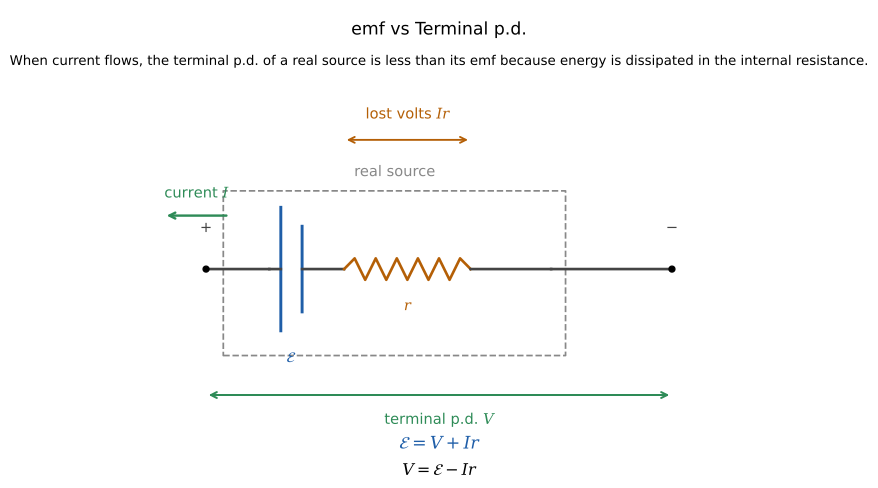
Figure: A real source is modelled as an ideal emf in series with internal resistance . When it supplies current, each coulomb receives joules, loses joules internally, and delivers joules externally.
Lost Volts
When the source supplies current , the lost volts across the internal resistance are
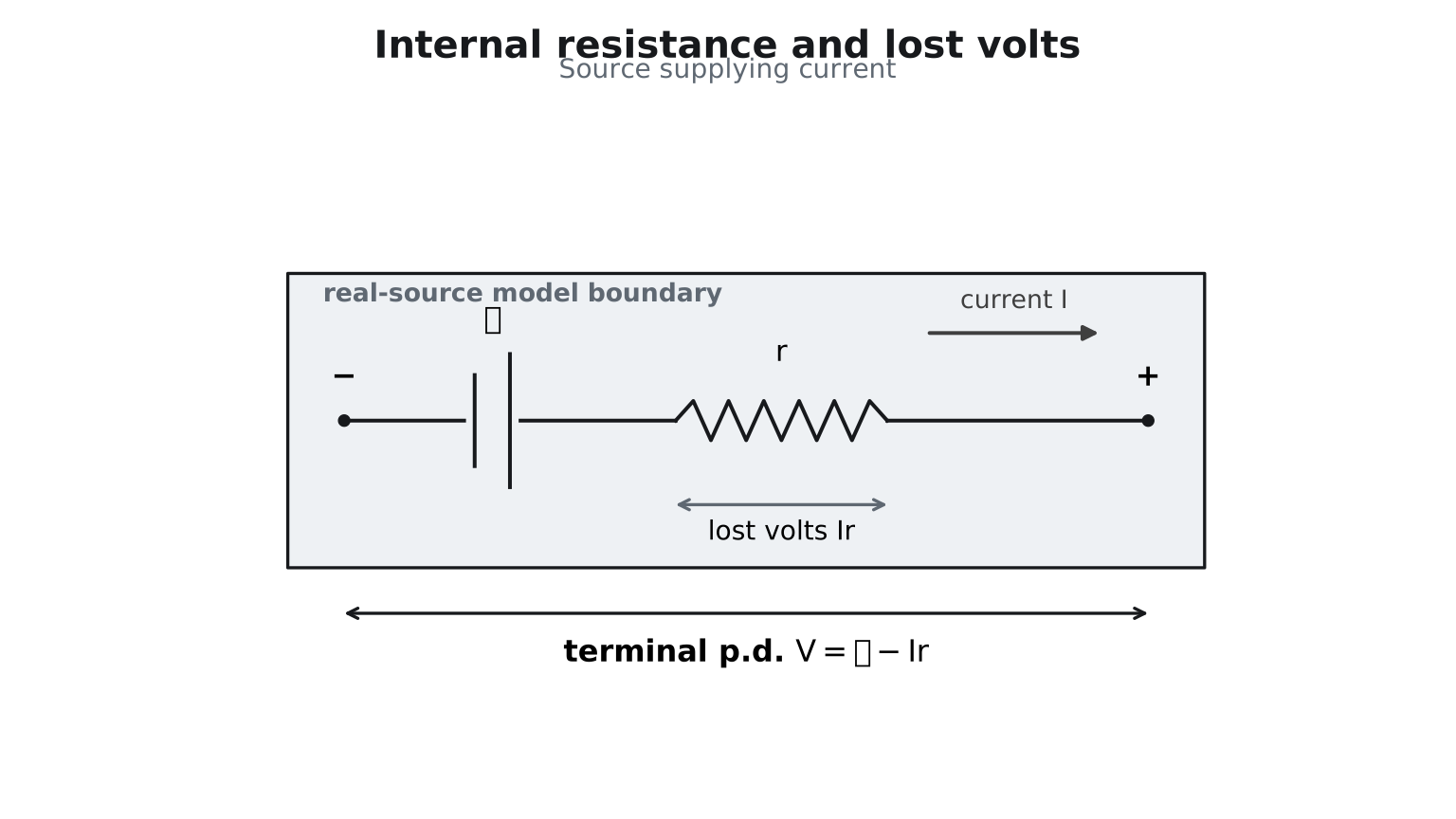
Figure: Lost volts are the p.d. across the internal resistance only, so the terminal p.d. is lower than the emf when the source supplies current.
Core Equation
For a source supplying current, energy conservation gives
so
Meaning:
- is energy supplied per unit charge
- is energy dissipated per unit charge inside the source
- is energy delivered per unit charge to the external circuit
Open Circuit
When no current flows,
so
For an ideal voltmeter, which draws negligible current, the reading equals the emf in this model. A real meter makes the equality approximate.
Short Circuit
In the idealised short-circuit model, the external resistance is approximately zero and current is limited mainly by internal resistance:
This can overheat the source and damage it.
V-against-I Graph
From
a graph of against is a straight line:
- vertical intercept =
- gradient =
- horizontal intercept =
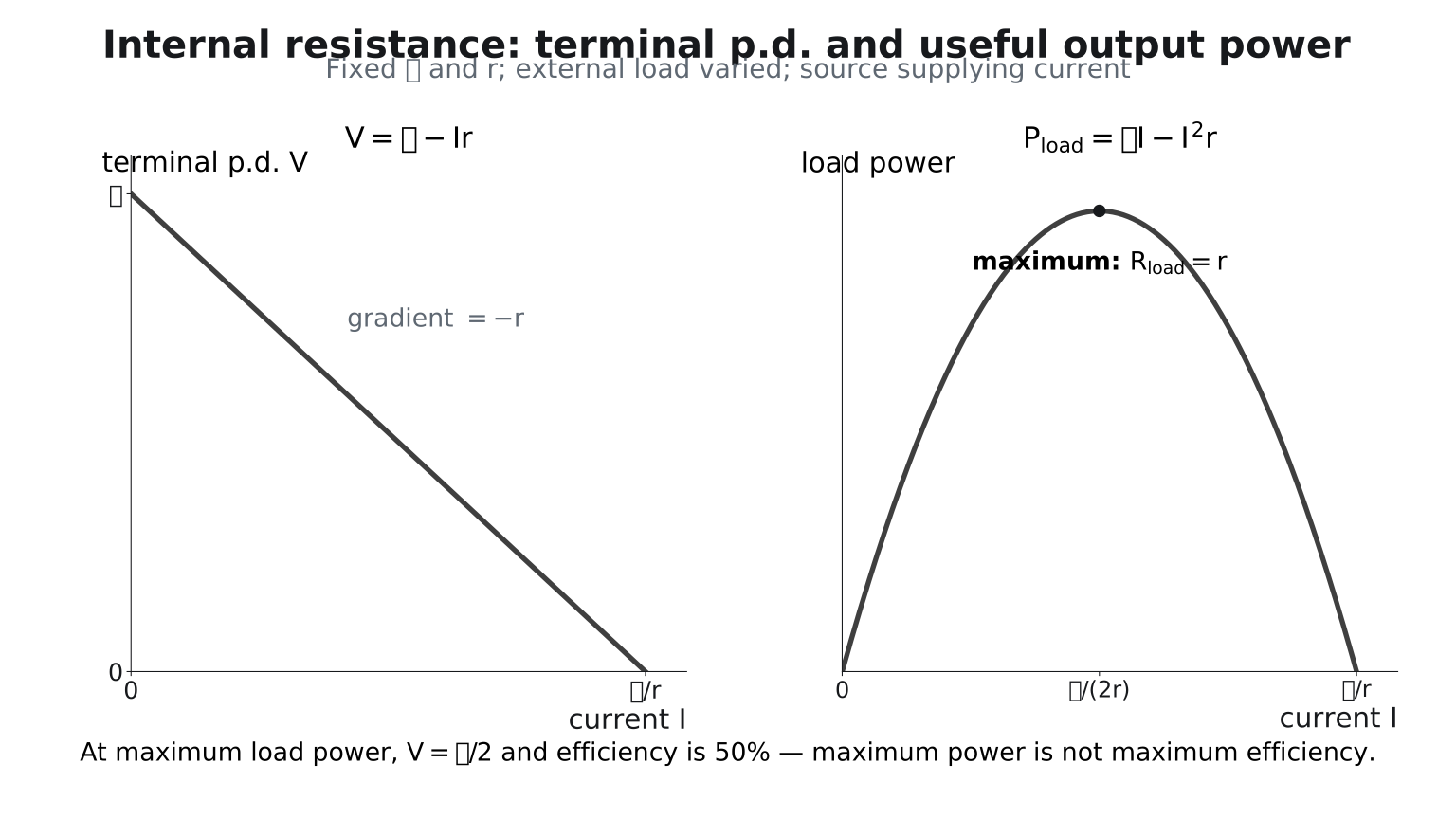
Figure: The straight – graph gives from its vertical intercept and from the magnitude of its gradient. The power curve shows that useful load power is zero at open circuit and in the ideal short-circuit limit, with a maximum between them.
Power
Power supplied by the source:
Power delivered to the external circuit:
Power lost inside the source:
For an external load resistance ,
The useful load power is
It is maximum when
Equivalently, the maximum occurs at and . This is the maximum-power transfer condition.
Efficiency
Source efficiency is useful power output divided by total power supplied:
Using and ,
At maximum load power, and . Increasing above 1 raises efficiency but eventually reduces the output power. Maximum power and maximum efficiency are therefore different design aims.
Enrichment: charging a source
The relation assumes current leaves the positive terminal. When a rechargeable source is charged, current enters its positive terminal and the terminal p.d. is .
Worked Example
A cell has emf and internal resistance . It supplies a current of .
The terminal p.d. is
The power lost inside the source is
Common Exam Traps
emf is not a force
emf is energy per unit charge, measured in volts.
Terminal p.d. is not always emf
For a real source supplying current,