Electric Potential and Energy
Branch note: This page deepens the energy viewpoint within Electric Fields. The hub keeps the main storyline; this note is for work, potential, equipotentials, and sign handling.
Syllabus connection
Electric potential, point-charge potential and potential gradient are explicit Topic 13 outcomes. Potential energy and energy conservation connect them to the earlier Work, Energy and Power topic.
Overview
Electric Potential and Energy explains the energy viewpoint of Electric Fields. Instead of focusing only on force, we study how much work is needed to move charges and how energy changes in an electric field.
This topic is closely linked to Energy Forms and Conservation.
Core Ideas
- electric potential is energy per unit positive charge at a point
- electric potential is scalar, while electric field is vector
- electric potential energy depends on the test charge placed at the point
- work done by the field and work done by an external agent have opposite signs for the same displacement
- equipotentials are perpendicular to electric field lines
- the electric field points in the direction of decreasing potential
Exam Relevance
This branch note is tested through:
- point-charge potential and potential-energy calculations
- algebraic addition of potentials from several charges
- energy-change and speed-gain questions using
- equipotential diagrams and potential-gradient reasoning
- sign interpretation for positive and negative charges
Definition
Electric potential at a point is the work done per unit positive charge by an external agent in bringing a small positive test charge from infinity to that point, without changing its kinetic energy.
where:
- = electric potential
- = work done by external agent
- = positive test charge
The external agent moves the charge without changing its kinetic energy. The test charge is small enough not to disturb the source arrangement.
Units:
- volt (V)
- J C
Key Idea
Potential tells you the energy per unit charge at a point.
It is a scalar quantity.
Why It Matters
The potential viewpoint helps you:
- compare different locations in a field without dealing with force components each time
- connect electric fields to energy change and particle speed
- interpret equipotential diagrams
- avoid mixing vector and scalar quantities
Key Representations
Why Infinity Is Used as Reference
For isolated charges, electric potential decreases with distance and approaches zero far away.
Hence we define:
This gives a convenient reference level.
This infinity reference suits isolated finite charge distributions. For an ideal uniform field extending indefinitely, choose a convenient zero and use potential differences; physical predictions depend on .
Potential Due to a Point Charge
For source charge :
where:
- = distance from the charge
Sign of Potential
- positive charge gives positive potential
- negative charge gives negative potential
Trend
So potential decreases more gradually than field strength.
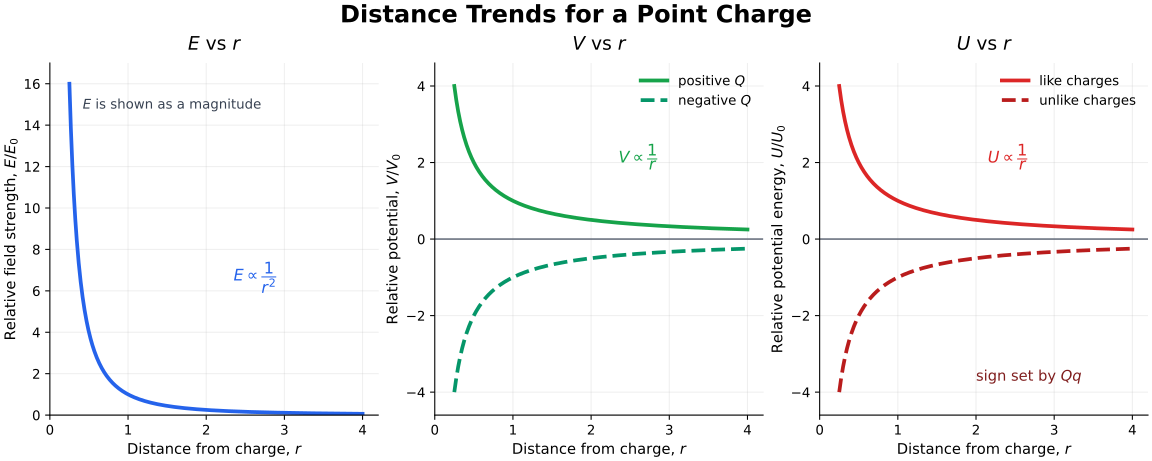
Figure: For a point charge, the field-strength magnitude follows a trend, while electric potential and electric potential energy follow trends with signs set by the source charge and test charge.
Superposition of Potential
If several charges are present:
Because potential is scalar, add algebraically with signs.
This differs from electric field, which must be added vectorially.
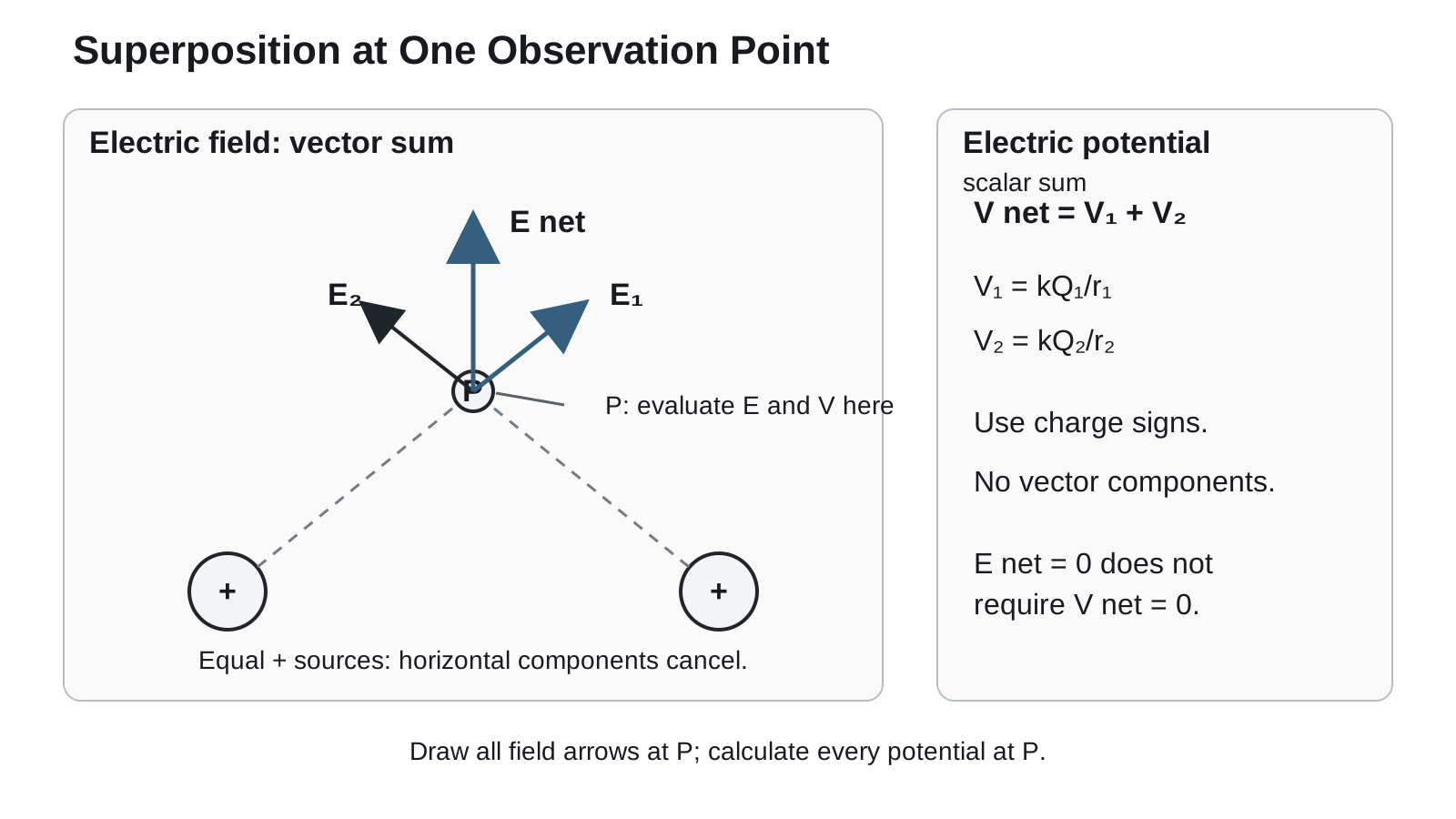
Figure: At one observation point, add potential contributions as signed numbers but add electric-field contributions as arrows. Thus cancellation of does not by itself make zero.
Electric Potential Energy
Potential energy of charge at potential :
For point-charge interaction:
Units:
- joule (J)
Meaning of the Sign of Potential Energy
Like Charges
Energy must be supplied to bring them closer.
Unlike Charges
The system releases energy when brought together.
Change in Potential Energy
If a charge moves between two points:
where:
Always calculate final minus initial first. Since , the potential energy of a negative charge changes in the opposite sense to .
Work Done: Field vs External Agent
This is a common source of confusion.
Work Done by External Agent
For slow controlled movement with no kinetic-energy change:
Work Done by Electric Field
If the field does positive work, potential energy decreases.
Energy Conservation View
If only electric forces act:
So:
- losing potential energy increases kinetic energy
- gaining potential energy decreases kinetic energy
This is useful in particle-acceleration problems.
Equipotential Lines and Surfaces
An equipotential joins points with the same electric potential.
Along an equipotential,
The electric field therefore does no work for a displacement along it. Since electric force is parallel or antiparallel to , the field must be perpendicular to the equipotential.
Properties
- no work is done moving a charge along it
- it is always perpendicular to electric field lines
- for equal potential intervals, closer spacing means a larger potential gradient and stronger field
Examples
Point Charge
Concentric circles in 2D or spheres in 3D.
Uniform Field
Parallel lines perpendicular to the field direction.
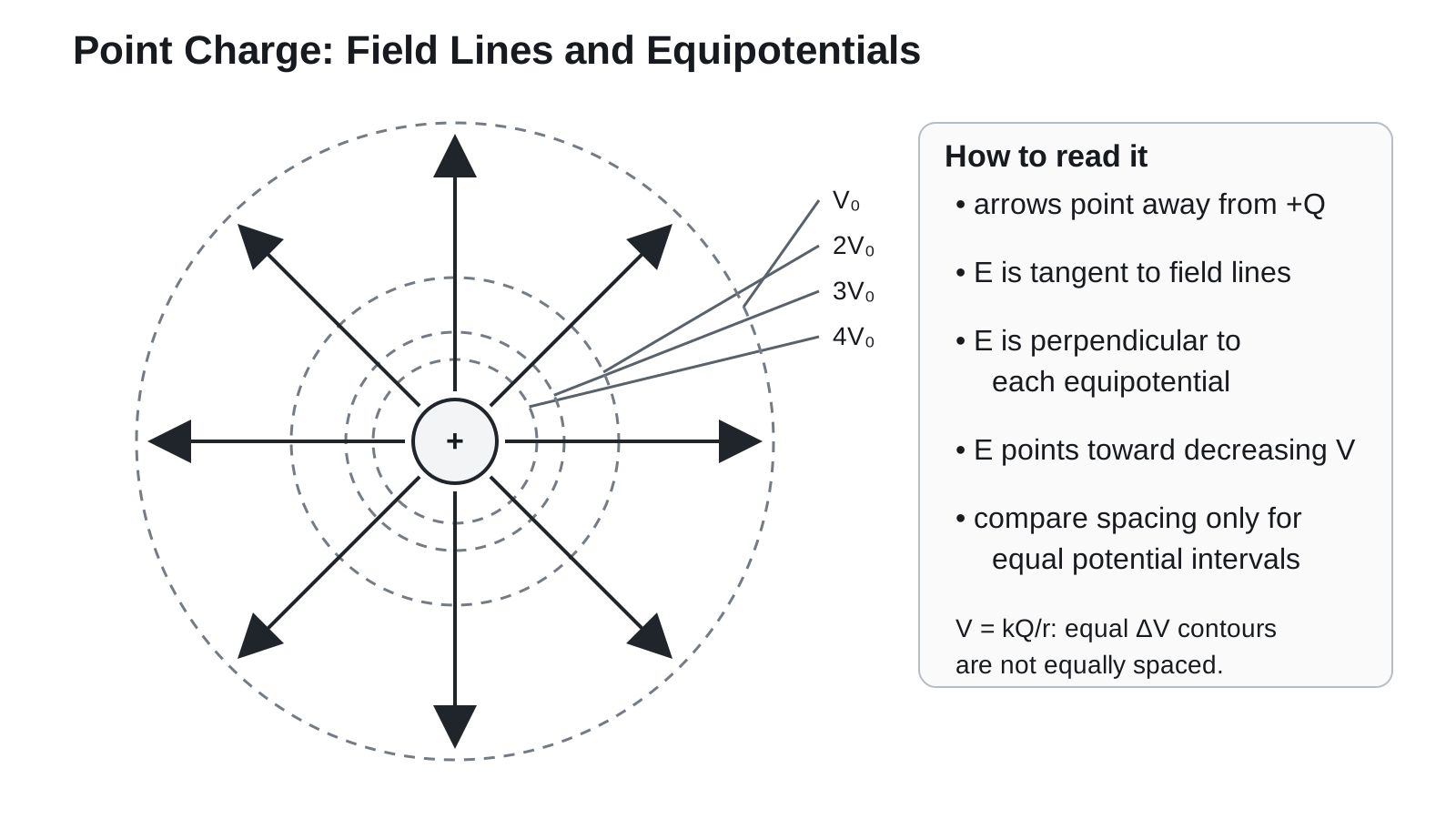
Figure: Electric field lines show the force direction on a positive test charge and are perpendicular to equipotentials. The field points toward decreasing potential, and closer equipotential spacing means a larger potential gradient.
Relation Between Potential and Field
Along a chosen coordinate , the field component is the negative potential gradient:
Meaning:
- the electric field points toward lower potential
- a steeper drop in potential means a stronger field
For two nearby points, . The minus sign gives direction; the syllabus statement that field strength is numerically equal to potential gradient refers to magnitudes.
For a uniform field between plates:
where is plate separation.
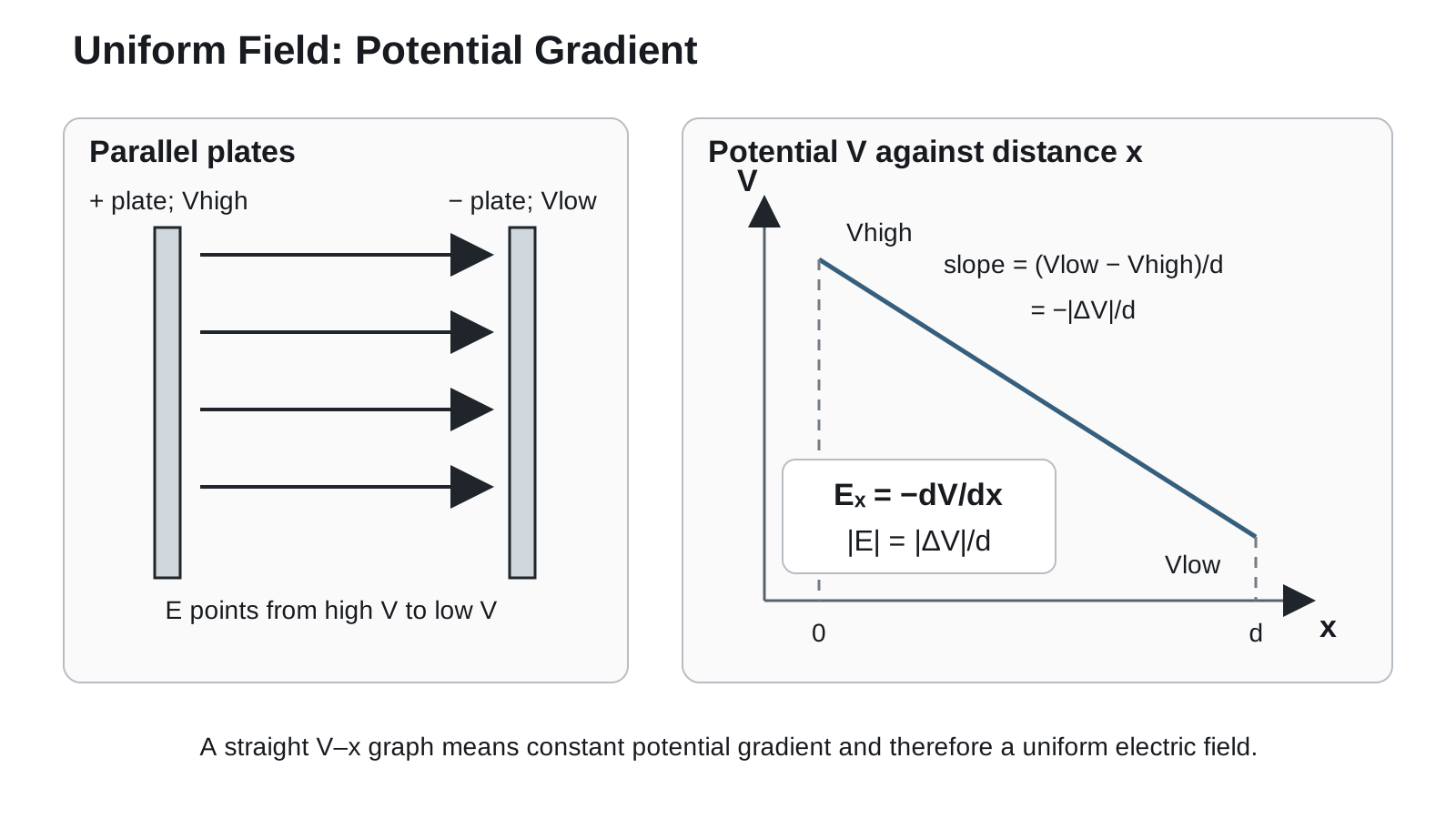
Figure: Potential varies linearly with perpendicular distance in the central uniform region. The field component is the negative graph slope; reversing the -axis changes both signs but not the field magnitude .
Potential vs Potential Energy
Electric Potential
- property of the location in the field
- independent of the test charge
- unit: V or J C
Potential Energy
- depends on both the location and the charge placed there
- depends on the sign and magnitude of
Typical Interpretations
Positive Charge Released Freely
If released from rest, initially accelerates toward lower potential.
Negative Charge Released Freely
If released from rest, initially accelerates opposite to the field, toward higher potential.
But Remember
Potential energy depends on charge sign, not just potential alone.
Worked sign check
Suppose a particle moves from to , so .
- For , .
- For , .
If released and only the electric force acts, the negative particle gains of kinetic energy. This calculation is safer than memorising a direction rule without checking the sign of .
Interaction-energy derivation
The result follows by integrating the inverse-square force from infinity. The calculus derivation is supportive enrichment; correct use and interpretation of potential are the syllabus focus.
Graph Trends with Distance from a Point Charge
Potential
Potential Energy
Sign depends on .
Field Strength Comparison
Common Mistakes
- Confusing potential with potential energy
- Forgetting the sign of charge in
- Using vector rules for potential
- Assuming higher potential always means higher potential energy
- Forgetting the infinity reference
- Mixing work done by the field with work done by the external agent
Quick Exam Method
If Asked for Potential at a Point
Use:
If Asked for Energy Change
Use:
If Asked for Speed Gain
Use:
Summary
Core equations: